 Listen on YouTube
Sleep for Parents
Sleeping away from home with a baby: keeping things calm and safe
A plain checklist for holidays, grandparents and hotel stays, based on Red Nose guidance.
A new room, a different bed, strange sounds. Holidays, grandparents’ houses and hotel stays can be lovely, and they can also leave a baby (and the adults) unsettled. This post pulls together the practical points from Red Nose, the Australian safe sleep organisation, and the NHS, plus a few calming ideas. For more on portable cots in particular, see our earlier post on portable cot basics.
The short version
- Your baby still needs a separate, safe sleep space, wherever you are.
- A portable cot should meet the Australian Standard and be set up exactly as the maker says.
- Keep the routine familiar, dress for the temperature, and keep the cot free of extras.
- A rough night or two away from home is common.
Before you go
1. The sleep space comes first
Red Nose says a baby should always have a separate, safe sleep space, and should never share a bed with an adult, in any kind of accommodation. If you use a portable cot (portacot), Red Nose says it should meet the Australian Standard, and links to the government’s mandatory standards for infant sleep products. All portable cots sold in Australia must meet the mandatory standard, and Red Nose says to check the product label or instruction manual to confirm it.
If the cot is borrowed or supplied by the place you are staying, Red Nose suggests checking it for rips, tears or missing parts, confirming that it meets Australian standards, and phoning ahead if you are unsure.
2. Pack for changing temperatures
Overheating is a concern on trips. Red Nose suggests packing a range of clothing, such as short and long sleeved bodysuits, singlets and socks, and sleeping bags in different TOG ratings, plus wraps or swaddles of different thicknesses. Dress your baby for the temperature of the room to help prevent overheating.
3. Bring the familiar things
Red Nose suggests keeping your baby’s sleep schedule as close to normal as possible. Familiar bedtime rituals can help a baby settle in a new place. That might be the same bath, the same feed, the same quiet song, in the same order. The NHS lists a bath, night clothes, a fresh nappy, dimmed lights, a cuddle, a story or a lullaby as an example of a soothing routine. Our post on a gentle bedtime routine has ideas for building one.
When you arrive: setting up the cot
4. Set it up fully, every time
Red Nose says to follow the manufacturer’s instructions, make sure the base is flat and stable before placing your baby inside, and set the cot up fully every time.
5. Keep it plain
- Use only the mattress that came with the cot. Red Nose says not to add extra mattresses or padding, because gaps can let a baby become wedged.
- Remove pillows, toys and loose blankets before putting your baby in.
- Avoid bedding with exposed elastic, which Red Nose lists as a strangulation hazard.
- Check the cot for damage, broken parts or mesh tears, and do not use it if it does not lock securely into place.
- Check the weight limit. Red Nose says most portable cots have a limit of about 15 kg, but it varies, so check your cot’s instructions.
Red Nose also says portable cots are for occasional or short-term use, such as travel or visiting, and are not a permanent replacement for a standard cot.
6. Sleeping in the same room
The NHS says that for at least the first six months, your baby should sleep in the same room as you, day and night, which can reduce the risk of SIDS. Away from home that often means a portable cot in your room.
At bedtime
7. Keep it calm and a little dim
Keep lighting low and the evening quiet. The NHS suggests that at night you keep the lights low, speak quietly and avoid playing. You do not need a silent house either; the NHS says getting your baby used to some noise is helpful, which is handy when a hotel corridor or a lively family is nearby.
8. Comfort objects
Red Nose says that once a baby is over seven months, a familiar soft toy or comforter is an option. Remove it from the sleep space at nap and bedtime, though your baby can enjoy it while awake.
9. Prams are not for sleep
In its camping guidance, Red Nose says never to use a pram for sleep, as it increases the risk of overheating and suffocation.
10. A little music, if you like it
If you play soft music, keep it quiet and at a distance. See white noise and soft music for how loud is too loud. Our long mixes are on the Make Your Mix page; the music is composed by human composers from around the world.
On the road and outdoors
Car travel
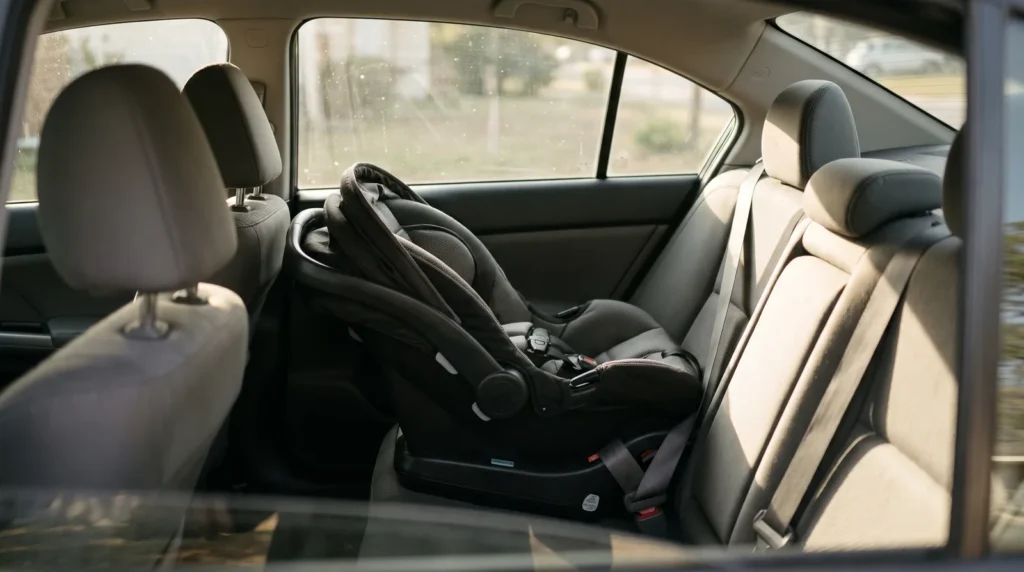
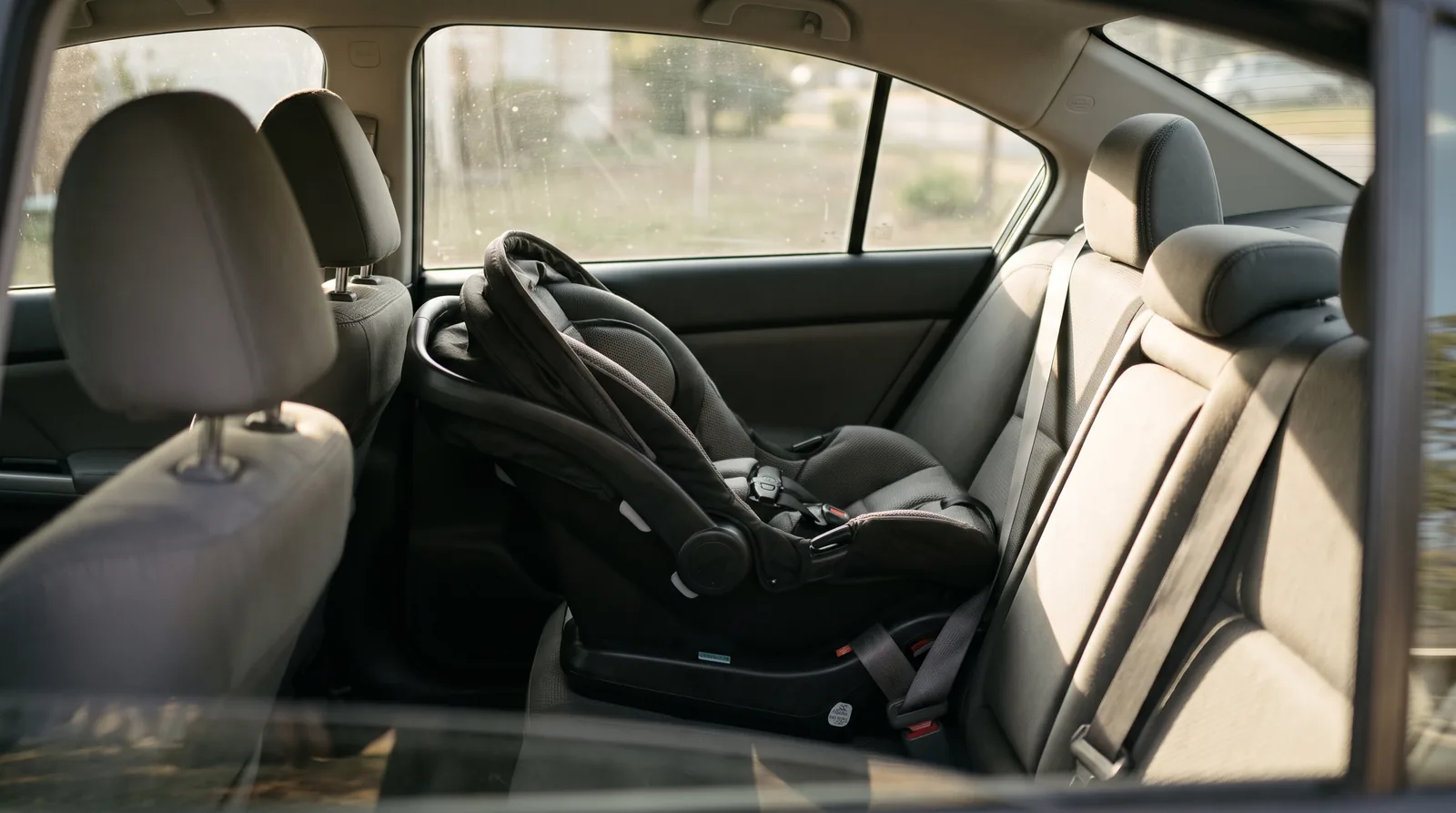
Red Nose says a correctly fitted infant restraint that meets the Australian standard is required for every trip. For long drives, it suggests window shade cloths to block direct sunlight, checking on your baby regularly, taking frequent breaks and offering fluids often.
Camping and caravans
Red Nose says the safest sleep space for a baby while camping is a portable cot that meets the mandatory Australian Standards. If a portacot will not fit in a small caravan, it suggests a firm, flat mattress placed directly on the floor, in an area free of hazards and well ventilated. Red Nose also notes that babies are more sensitive to heat than adults, and suggests avoiding hot, stuffy or poorly ventilated places and checking your baby often for signs of heat stress.
When you get home
A baby may sleep worse for a night or two away from home, and that is common. Going back to your usual routine when you return is usually enough. If you are worried about your baby’s sleep, talk to your child health nurse or doctor. Our guide to baby sleep by age has a rough map of what is normal.
A quick checklist
- Cot meets the Australian Standard and is fully set up.
- Cot is free of pillows, toys, loose blankets and extra padding.
- Clothing and sleeping bags suit the room temperature.
- Same routine as at home, in the same order.
- Baby sleeps in a separate safe space, in your room.
- Car seat fitted correctly for the journey.
Where this came from
- Red Nose, How to keep your baby safe while travelling (page updated 1 October 2026)
- Red Nose, Portable and folding cots (page updated 10 July 2026)
- Red Nose, Safe sleep while camping (page updated 1 October 2026)
- NHS, Helping your baby to sleep (page last reviewed 28 January 2025)
Last reviewed 9 November 2026. We are not doctors, and this is not medical advice.