 Listen on YouTube
Sleep for Parents
Can quiet music help you wind down? What one sleep-health site says
Parents need a wind-down too. Here is what the Sleep Foundation says about music before bed, and where the evidence is thin.
Most sleep advice is about babies. This one is for you. The Sleep Foundation, a US sleep-health site, has a page on music and sleep (updated 29 July 2025, written by Rob Newsom and medically reviewed by Anis Rehman, MD). We read it so you do not have to, and we want to be clear about how far the evidence goes.
The short version
- The page says music before bed may help some people fall asleep faster and sleep better.
- It describes slower music, around 60 to 80 beats per minute, as a common choice.
- It says there is no clear agreement on the best music for sleep, and personal taste matters.
- It suggests a small speaker near the bed instead of earbuds.
How music might help, according to the page
The Sleep Foundation lists several ways music may affect sleep. It says music may lower the stress hormone cortisol, which can reduce the alertness that gets in the way of sleep. It may also trigger the release of dopamine, which may help with bedtime mood and with pain, a common sleep disruptor. It may calm the autonomic nervous system, which the page links to slower breathing, a lower heart rate and lower blood pressure. And it can mask nighttime noise and give your mind something other than worries to follow. The page’s wording is careful: it says “may” throughout.
What the page describes
In one study, adults who listened to 45 minutes of music before bed reported better sleep from the first night, and the effect seemed to grow with repeated use. In another, women with insomnia symptoms played an album of their own choice at bedtime for 10 nights. The page says the time it took them to fall asleep dropped from 27 to 69 minutes down to 6 to 13 minutes. The page also mentions research on premature infants and school-age children, and on older adults, without giving details.
About the speed of the music
The page suggests slower music, around 60 to 80 beats per minute. It notes that normal resting heart rates are 60 to 100 beats per minute, and that the body may sync with slower music. It also says some people may relax more with upbeat music, so slower is not a rule.
How strong is the evidence?
The page itself says there is no clear agreement on the best music for sleep, and that most studies used playlists that people chose themselves or that were designed for sleep, so the results may partly reflect personal taste. It gives no sample sizes for the studies it mentions. We read this as promising, not settled.
Building music into an evening
The Sleep Foundation suggests making music a steady part of your wind-down, using ready-made sleep or relaxation playlists or building your own, and trying playlists in the daytime to see whether they relax you. It suggests avoiding songs that bring up strong emotions, and experimenting until you find what works. Our post on a gentle bedtime routine shows where music can fit.
Practical cautions from the same page
- Keep the volume soothing, not disruptive.
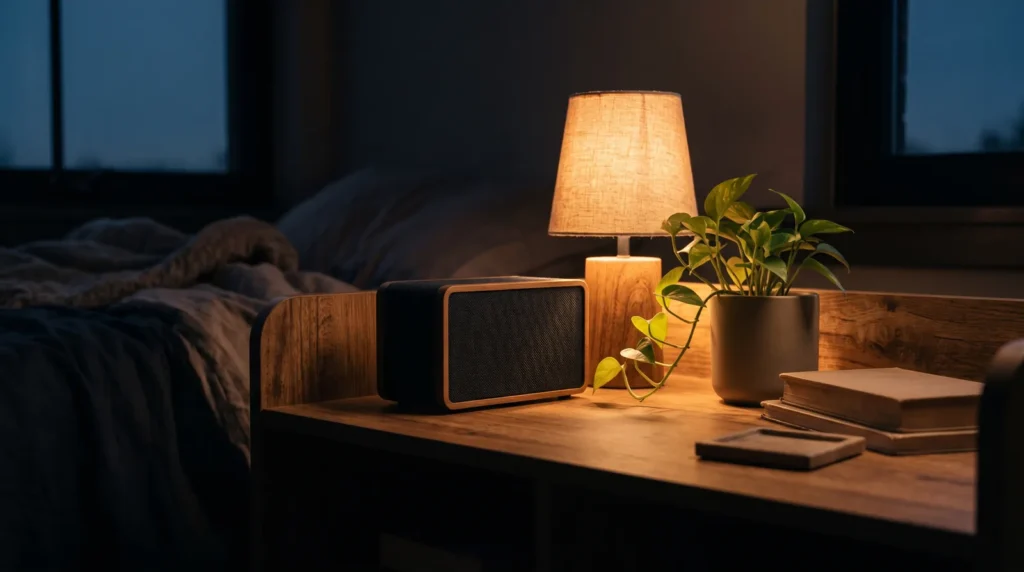
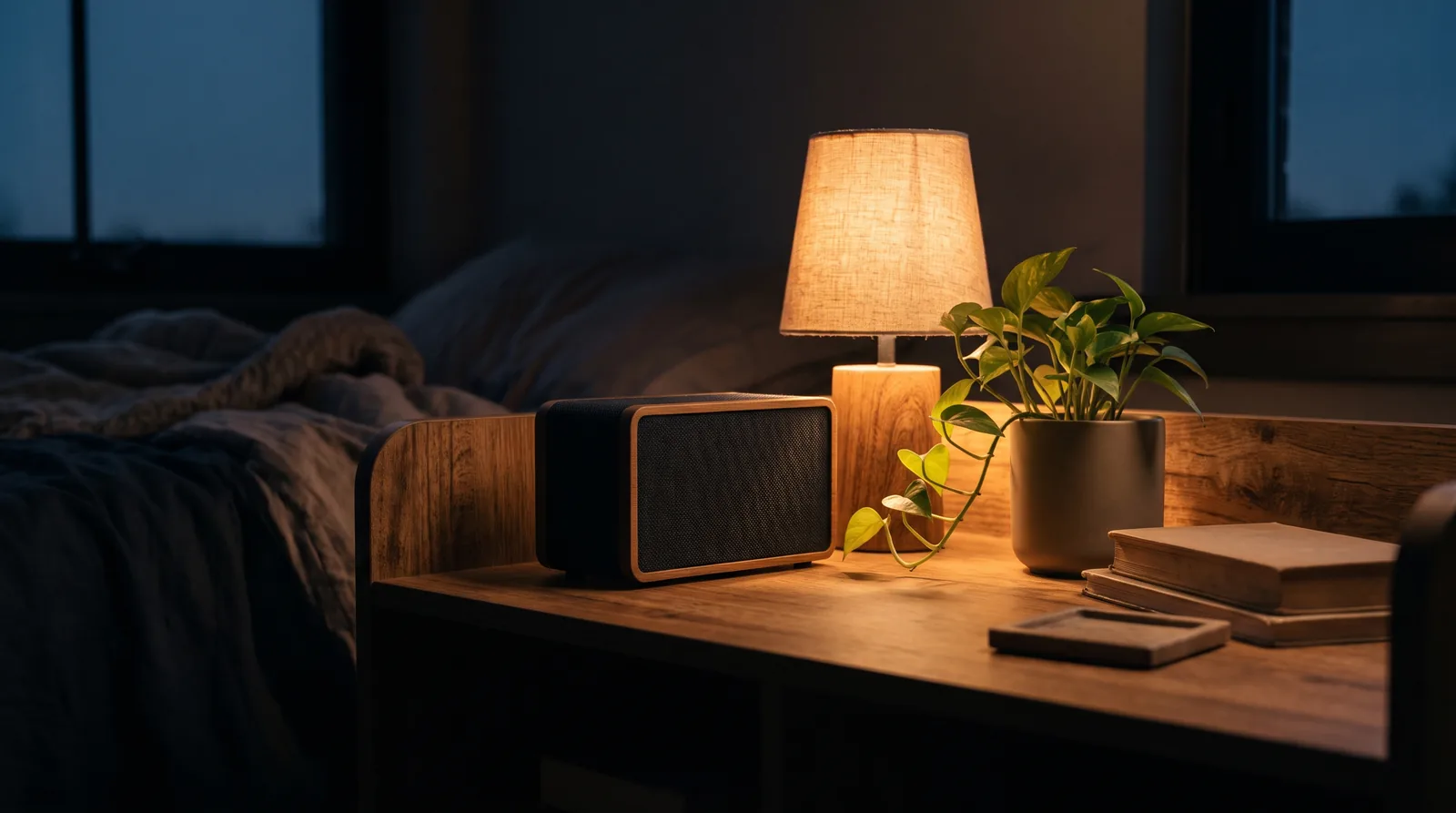
- Use a small stereo or speaker near the bed rather than earbuds or headphones, and choose a speaker without bright lights.
- Headphones or earbuds played loudly while you sleep may damage the ear canal, and sleeping with earbuds may cause earwax build-up and raise the risk of ear infections.
- Nighttime noise can reduce sleep efficiency.
If a baby shares your room, remember that this advice is for adults. See white noise and soft music for how loud is too loud around babies, and safe sleep for the cot guidance.
When music is not enough
The page mentions that certified music therapists can assess your needs and build a treatment plan, and suggests talking with your doctor about music therapy. If sleep is a bigger problem for you, please talk to a health professional. Our post on looking after your own sleep as a new parent covers when to seek help.
What we do with this
We make slow, instrumental music with no words, and we keep it short and quiet. If you try it, choose something you like, play it low from a speaker, and see how you feel after a week. You can find ours on the Listen page.
Where this came from
- Sleep Foundation, Music and sleep: can music help you sleep better? (page updated 29 July 2025)
Last reviewed 9 November 2026. We are not doctors, and this is not medical advice.