 Listen on YouTube
Sleep for Parents
Safe sleep for babies: the six recommendations in plain words
When you are tired, one trusted checklist beats a hundred opinions. Here is what Red Nose, the Australian safe sleep organisation, recommends.
If you search for baby sleep advice at 3 am, you will find a lot of opinions. For safety, it helps to start with one trusted source. In Australia, that is Red Nose, an organisation that works on safe sleep for babies. This page puts its six recommendations in plain words, then adds the practical details from Red Nose’s guides on cots and the sleeping environment. It is a summary, not a replacement for the originals, which we link at the bottom.
The six recommendations
- Always place baby on their back to sleep. Red Nose says this keeps the airway clear and lets baby’s protective reflexes work.
- Keep baby’s head and face uncovered. Babies control their temperature through the head and face, so leaving them uncovered helps them avoid overheating.
- Keep baby smoke-free, before and after birth. Red Nose lists Quitline (13 78 48) as a source of free quitting help.
- Provide a safe sleeping environment, night and day. See the sections below.
- Sleep baby in their own safe sleep space in the same room as you for at least the first 6 months.
- Breastfeed baby, if possible. Red Nose says breastfeeding has been shown to reduce the risk of sudden infant death.
What a safe sleeping environment looks like
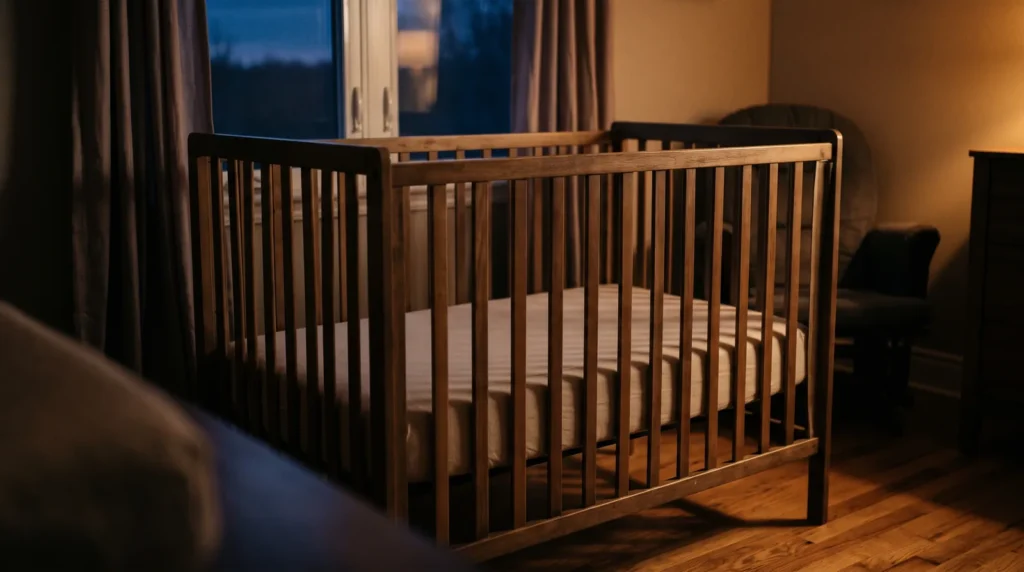
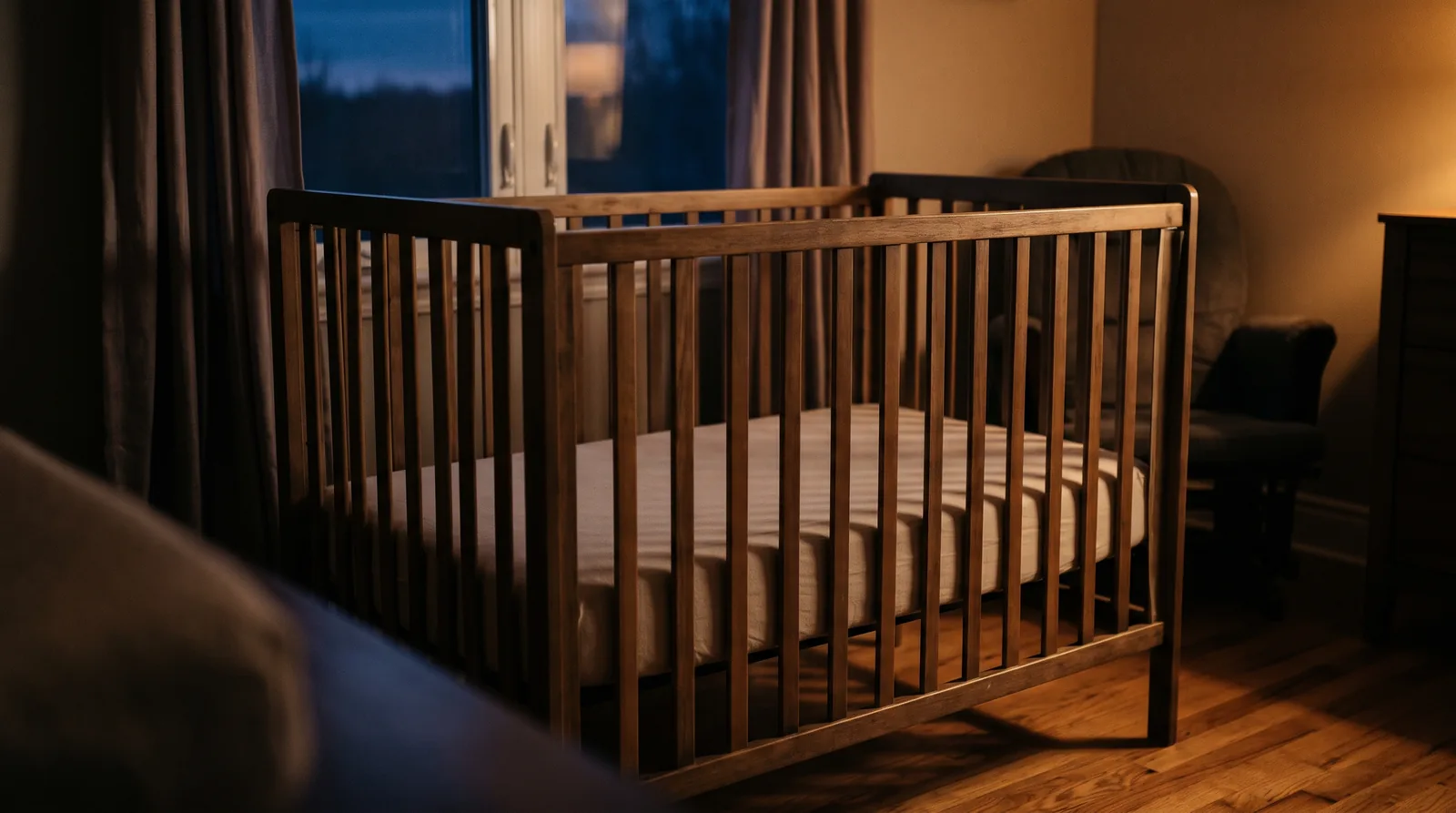
Red Nose puts it simply: the safest place for a baby to sleep is in a safe cot, on a safe mattress, with safe bedding. In practice that means:
- A cot that meets the mandatory Australian standards for infant sleep products. If you use a second-hand cot, Red Nose says it should still carry its safety standards tag, all the pieces should be intact, and the base should not sag.
- A firm, flat mattress that is the right size for the cot. Red Nose says to use a single mattress that fits snugly, with gaps of 20 mm or less at the sides and ends, and sits level rather than tilted or raised. A second-hand mattress should not be damp, torn, mouldy or sagging.
- Lightweight bedding, tucked in firmly and pulled up only to baby’s chest.
- A safe sleeping bag, if you use one: it fits well across the neck and chest, leaves the arms out and has no hood.
- Nothing extra in the sleep space. No doonas, loose blankets, pillows, cot bumpers, lambswool or soft toys, and no extra mattresses.
Making up the cot, step by step
Red Nose’s guide to making up a baby’s cot gives a short sequence:
- Check the cot meets the Australian Standard and carries the label.
- Set up a firm, clean, flat mattress that is not tilted or raised.
- Place baby on their back, with the head and face uncovered and the feet at the bottom of the cot.
- Tuck any blankets in firmly, or use a safe baby sleeping bag instead.
- Leave out pillows, doonas, soft toys, cot bumpers and lambswools.
Places that are not safe for sleep
Red Nose says never to sleep a baby in an adult bed, bunk bed, waterbed, beanbag, couch, sofa or chair, or on a pillow or cushion. It also says that sleeping with a baby on a bed, couch, sofa or chair is unsafe. Red Nose does not recommend using a pram for sleep either, because of the risk of overheating and suffocation. These apply during the day as much as at night.
Cords, heaters and mobiles
Keep the cot away from blind and curtain cords and electrical items, which are strangulation hazards, and do not hang mobiles or bunting near the cot. Keep heaters and appliances away from the cot, to avoid overheating, burns and electrocution.
A note for when plans change
Sometimes a night does not go to plan. Red Nose says that if there is truly no alternative to sharing a sleep surface, you should remove pillows and doonas from the sleep area and not wrap the baby. That is harm-reduction advice for a hard night, not a recommendation. Return to a separate safe sleep space as soon as you can.
Away from home
The same rules apply at grandparents’ houses and in hotels. See our posts on sleeping away from home with a baby and portable cot basics for the extra checks.
When your baby starts to roll
Health services such as HealthyWA and the Sydney Children’s Hospitals Network say to stop wrapping once your baby can roll over. Our guide to baby sleep by age has more on what changes through the first year.
A short checklist
- Back to sleep, head and face uncovered, feet at the bottom of the cot.
- Cot meets the Australian standard; firm, flat, snug mattress.
- Lightweight bedding tucked in to the chest, or a safe sleeping bag.
- Nothing soft in the sleep space.
- Cot away from cords, heaters and mobiles.
- Baby’s own sleep space in your room for at least the first six months.
- A smoke-free home and car.
A gentle note for a tired night
This is guidance, not a test. If something here does not match what you are doing, you do not need to panic: you can change it tonight. If you would like to talk it through, Red Nose runs a Safe Sleep Advice Line on 1300 998 698, open 9 am to 5 pm, Monday to Friday (AEST). Your child health nurse and doctor can help too.
Music has no part in these six steps. We make lullabies for the grown-ups’ quiet time, once the safe sleep set-up is done.
Where this came from
- Red Nose, 6 safe sleep recommendations for babies
- Red Nose, What is a safe sleeping environment? (page updated 16 July 2026)
- Red Nose, What is a safe cot? (page updated 1 September 2026)
- Red Nose, How to make up a baby’s cot (page updated 8 September 2026)
- Red Nose, Safe sleep while camping (pram guidance; page updated 1 October 2026)
Last reviewed 9 November 2026. We are not doctors, and this is not medical advice.